
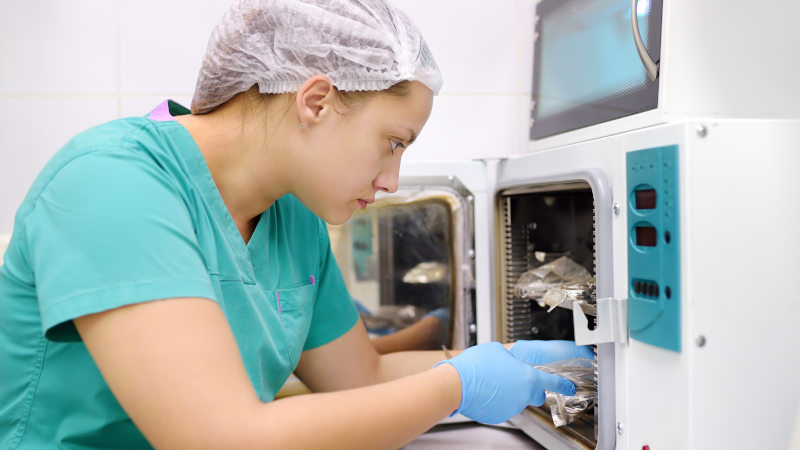
Autoclaves are vital in medical and dental clinics for properly sterilizing tools and maintaining patient safety. Plasma autoclaves and tabletop autoclaves are two of the most often used varieties, and both require regular maintenance and periodic autoclave repair to function properly.
Plasma autoclaves, which use low-temperature hydrogen peroxide sterilization, are highly advanced but can be sensitive to certain failures. Tabletop autoclaves, on the other hand, are compact, widely used, and subject to frequent wear due to high daily usage.
In this article, we’ll explain some of the most common autoclave repair needs for each type of device.
Plasma Autoclave
- Vaporizer or Injection System Failures: Disrupt the delivery of sterilant, preventing proper cycle completion.
- Sensor Malfunctions: Incorrect readings of pressure, temperature, or gas concentration might cause errors or failed sterilization.
- Vacuum Pump Issues: Limit the system’s capacity to remove air and evenly distribute sterilant.
- Calibration Drift: Causes variable performance and potential compliance issues.
Tabletop Autoclaves
- Door Gasket Wear or Damage: Causes steam leaks and reduces sterilizing efficacy.
- Heating Element or Thermostat Failure: Causes unstable or inadequate temperatures.
- Clogged Drains or Reservoirs: Often caused by mineral accumulation from poor water use.
- Water Quality-Related Scaling: Affects internal components and overall efficiency.
- Common Issues in Both Types
- Electronic Control Board Failures: Can result in error codes, shutdowns, or unresponsive controls.
- Regular Wear and Tear: Includes valves, seals, and internal components that degrade over time.
If you’re in need of professional autoclave repair, reach out to a member of our team at Georgian Anesthesia and Medical Corp.